Listen to the music within. Give it a voice.
01 — The music within
Inside every person there is music that no one has heard yet.
Music education begins with the first step towards bringing it out:
listening.
- Telling one sound from another,
- feeling the rhythm,
- following the melody,
- noticing the silence…
A bond with music begins with truly hearing it.
02 — Hear
To play well, you must first hear well.
We care about students being able to hear sound, rhythm, melody and musical relationships. Solfège, aural training, rhythm, sight-reading and reading music are not separate from the work at the piano; they move forward together with it.
Because music begins in the ear, before a single key is pressed.
03 — Understand
To understand music is to see beyond the notes.
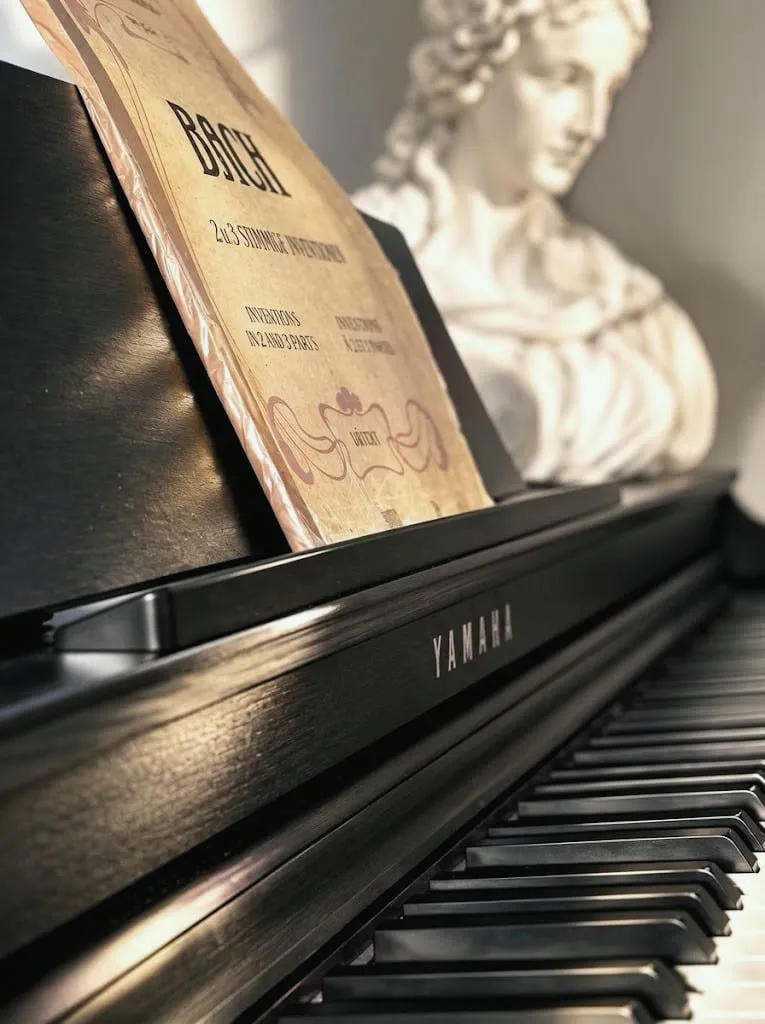
Rhythm, tonality, harmony, form and musical structure are explored step by step, according to the student’s age and level. Technical knowledge, aural perception and musical thinking grow together.
Because to know a piece of music is also to understand how it is built.
04 — Express
Understanding music is complete only when you can express it in your own voice.
We want students not only to play the right notes, but to sense the phrasing, character and feeling of the music and to shape their own interpretation. Dynamics, articulation, phrasing, tempo and style are all part of this process.
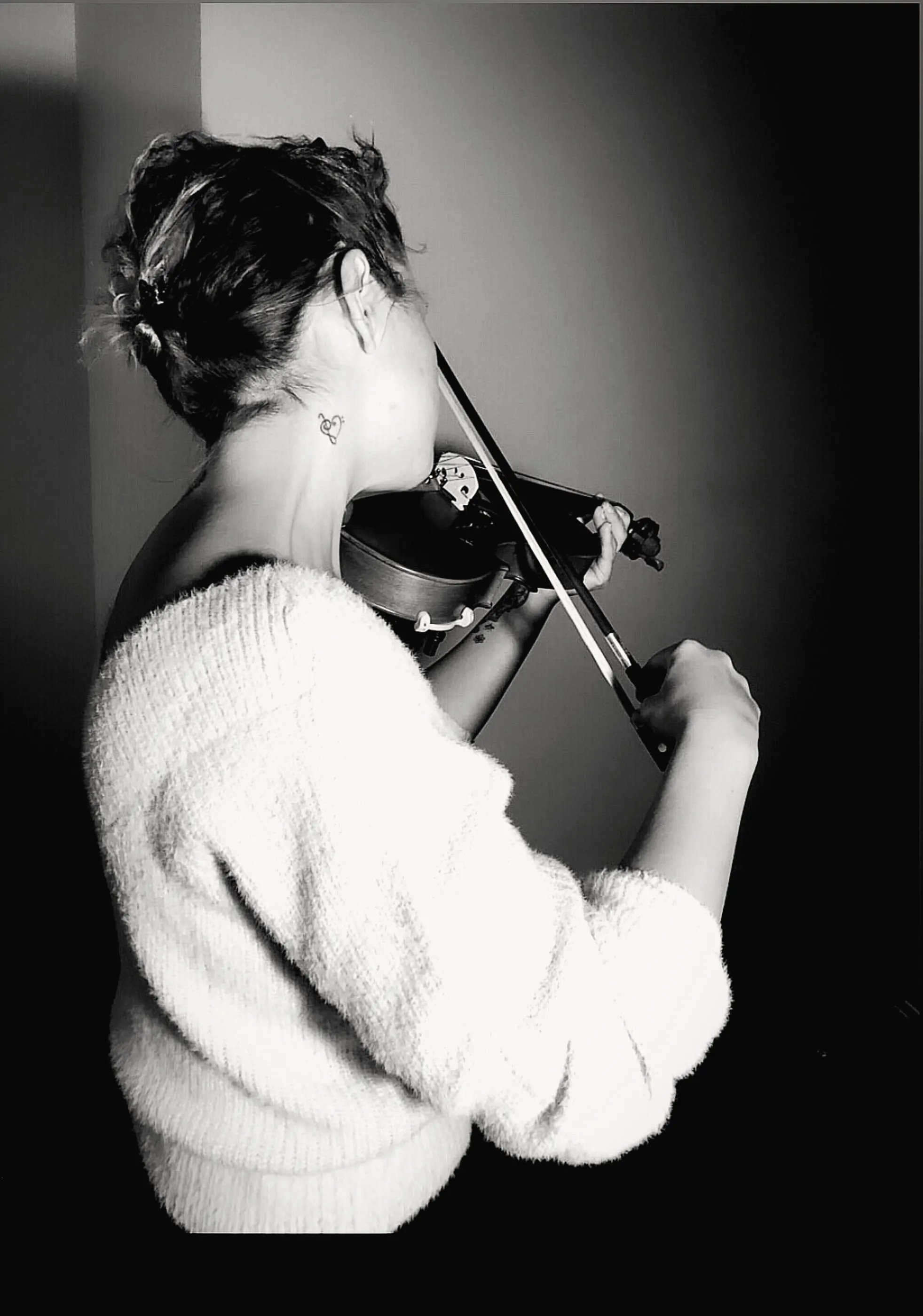
Because the same notes, in different hands, can tell a different story.
05 — A strong foundation
Musical growth is built on a strong foundation.
Technical work, scales, études, repertoire, solfège, aural training, reading music and music theory are not separate studies, but parts of a single whole that complete one another.
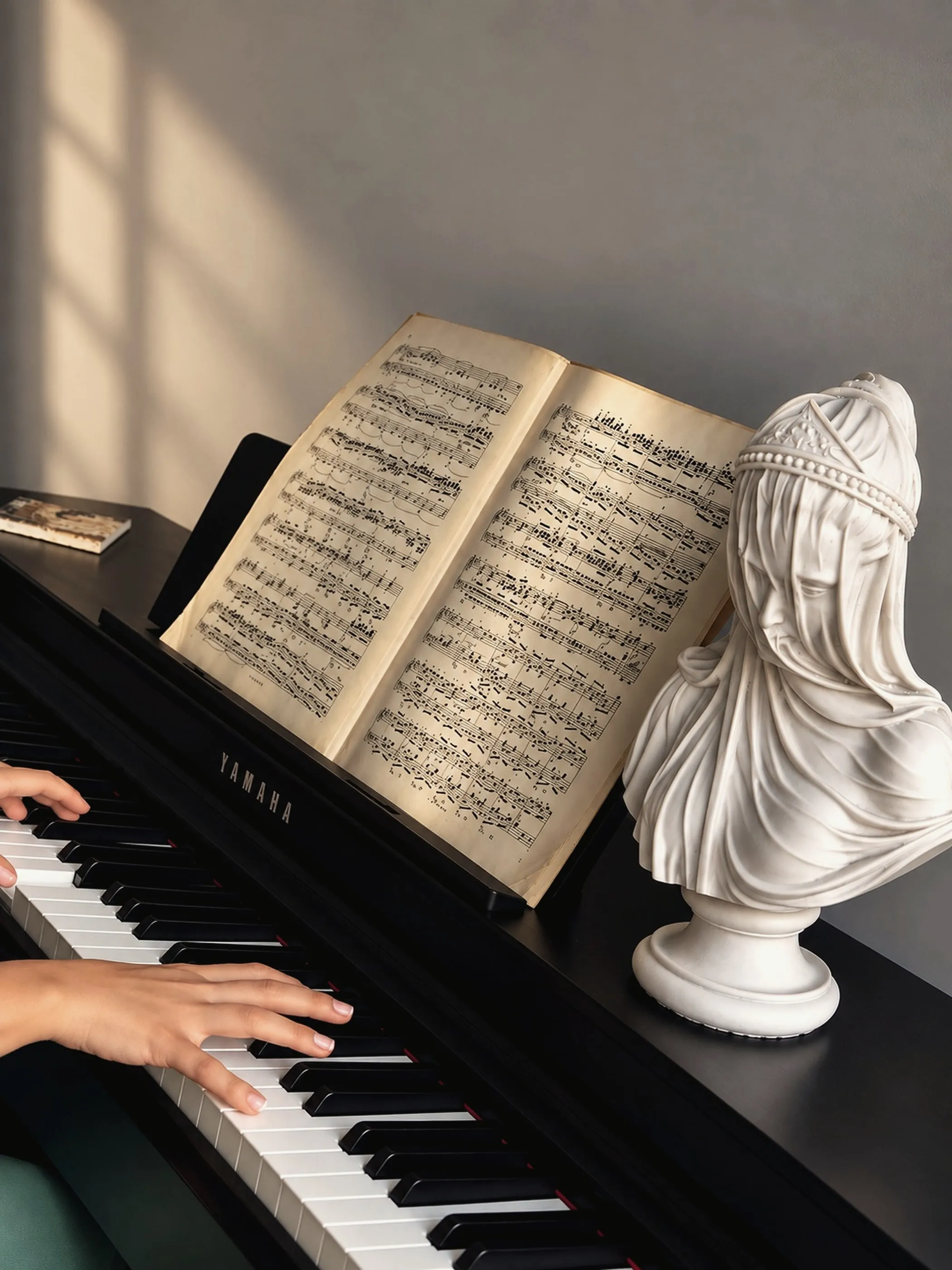
Finishing a piece is not, on its own, a measure of progress.
What matters is what the student learned through it, and what they carry into the next piece of music.
06 — Our lessons
Our lessons
-
06.1 Technical preparation “Control comes first.”
Every piano lesson begins with technical work suited to the student’s level.
We work on finger independence, coordination between the hands and controlled, deliberate movement. As the student develops, the exercises become more demanding.
The aim is not simply to play faster, but to keep control as the tempo rises.
-
06.2 Scales and tonality “Understanding the character of music.”
Scales are practised not only to train the fingers, but to come to know the structure and character of music.
We approach scales differently depending on the student’s age and level. With young children we may begin with how a scale feels and how it sounds; at later stages we can explore tonal relationships, major and minor structures and more advanced musical connections.
The same musical idea gains a new depth as the student grows.
-
06.3 Études “Developing technique within the music.”
We treat études not only as exercises in technical skill, but as a way of learning from inside the music.
Working on études suited to their level, students also develop their reading, rhythm, use of the metronome, musical terminology and tonal understanding. After we have worked through one étude together, we expect the student to solve some of the problems in the next one on their own.
In this way, students learn not only to play the étude, but how to practise the music in front of them.
-
06.4 Solfège and sight-reading “First see, read, understand.”
When a student meets a new piece, the first step is not to play it, but to read it.
Through solfège and sight-reading, we try to understand notes, rhythm, metre and musical expression before going to the piano. Our aim is for students, in time, to see for themselves where to begin with a new piece.
A good musician should be able to read not only the pieces they already know, but whatever new music comes their way.
-
06.5 The student’s own solution “Learning to think, rather than relying on the teacher.”
Rather than solving a piece for the student, we care about teaching them how to solve it.
When a student meets a new piece, we discover together where they are struggling, what they do not yet understand and where they might begin. Sometimes, instead of answering a question directly, we ask the right question so that the student can find their own solution.
The aim is not a student who never needs a teacher, but one who can use what they have learned to think independently.
-
06.6 Repertoire and musical expression “Technique becomes music.”
Technique gains meaning when it becomes music.
We choose repertoire according to the student’s level, development and musical journey. A piece is not chosen only because it is loved; sometimes it is chosen to work on a particular technical or musical skill the student needs to develop.
We want students to know the answer to the question: “Why am I learning this piece, and what will it give me?”
Foundations such as technique, tonality, rhythm and reading gradually turn into phrasing, dynamics, articulation, tempo, character and interpretation.
-
06.7 Practice and study habits “Leaving the student with knowledge, not just homework.”
Practice is not a burden handed out after the lesson; it is a continuation of what was learned in it.
What a student practises at home is shaped by how much they understood in the lesson and where they need to grow. We structure their practice notes accordingly, so that each student leaves knowing what to practise and how.
When students know what to practise, why and how, practice stops being an obligation and becomes part of their own development.
-
06.8 One system, a different path for each student “A shared system. Personal growth.”
Every student differs in age, level, way of learning and goals. That is why, within the same core structure, we shape each student’s path individually.
Some students need more repetition, some more listening, and some need to approach an idea from a different angle. The pace of the lesson, the way things are explained and the amount of practice can change with the student’s development.
The system stays shared; each student’s path within it is their own.
07 — The system
A shared foundation, a personal path.
At Bemol, every student moves forward on the same core educational structure. But that structure is applied differently according to each student’s development.
Age, level, way of learning, practice habits and goals can all differ. That is why we do not expect students to follow the same order, the same pace or the same repertoire.
What is shared is the system; how each student moves through it is personal.
08 — Levels
A level is not a label; it is a map of growth.
At Bemol, a level is defined not by how long a student has been taking lessons, but by what they are able to do.
We assess technical skills, aural development, reading and sight-reading, musical knowledge, repertoire and performance together.
- Preparatory
- Level I
- Level II
- Level III
- Level IV
- Level V
- Level VI
- Level VII
- Level VIII
- Laureate
Preparatory · Level I–VIII · Laureate
This structure is the educational map we use to see a student’s progress, identify the next areas of work and follow their development within a meaningful framework.
A student does not move up a level simply because time has passed. They move forward because they are ready.
09 — Following progress
Learning is a process. Progress is followed.
We follow a student’s development not by a general sense that lessons are going well, but through the changes that become visible over time.
Keeping in mind the starting point, the areas that need to grow and the practice process, we review each student’s progress regularly. Growth in technique, listening, reading, musical knowledge, repertoire and performance guides the setting of the next goals.
Not every student progresses at the same speed. What matters is that they are truly moving forward on their own path.
10 — Direction
Every kind of growth has a direction.
Where a musical education leads takes shape together with the student’s own goals.
Some students wish to keep music as a natural part of their lives,
some to perform on stage,
some to prepare for international assessments,
and some to pursue advanced academic or professional music education.
Our role is not to lead every student to the same place, but to give them a strong foundation from which to choose their own direction.
11 — Performance
Sharing music is part of learning, too.
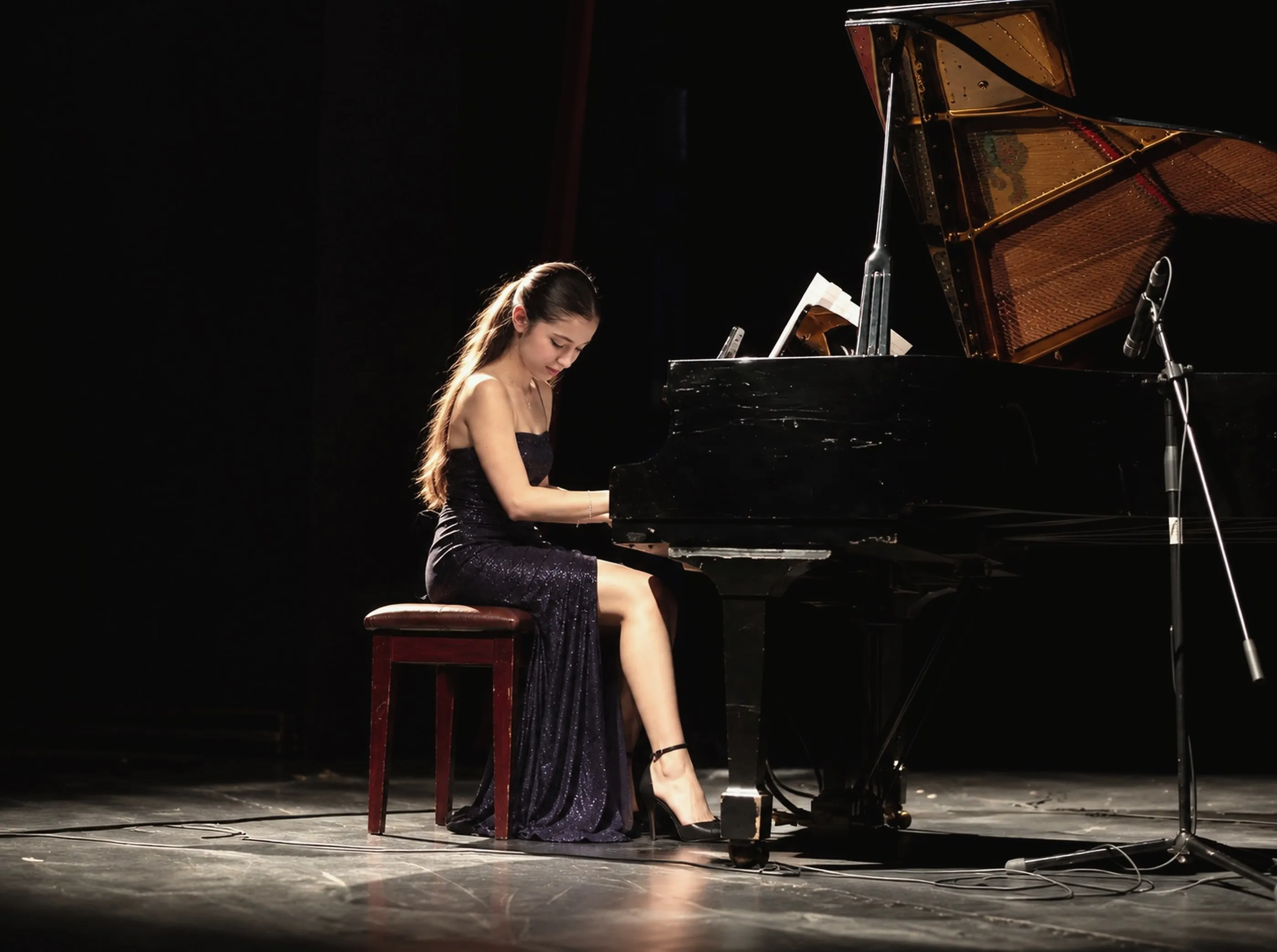
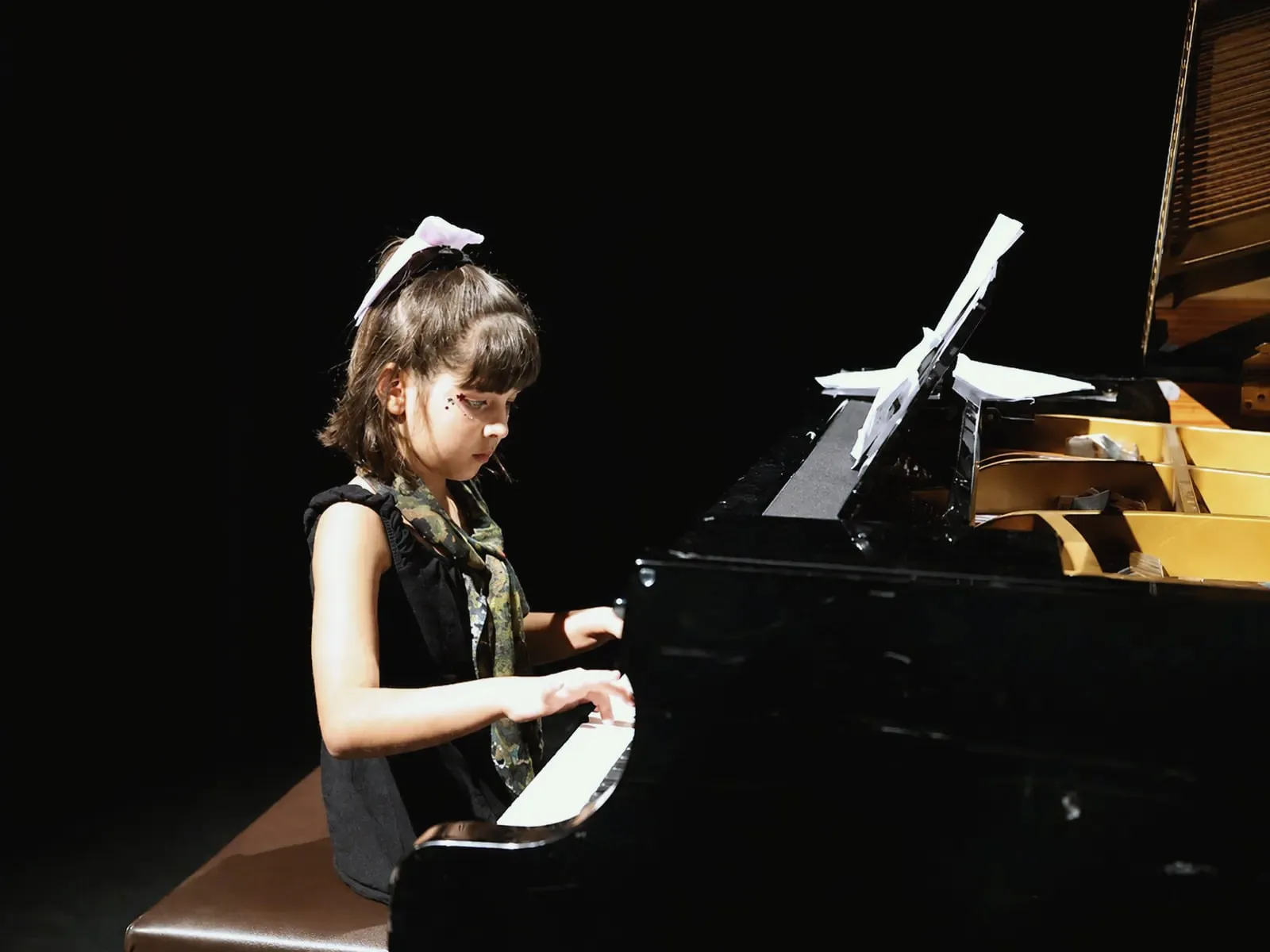
Performance is not merely a moment for displaying what has been learned; it is also part of learning to share music with others.
We want students to experience the stage, to present the music they have worked on in a different setting, and to learn how to handle nerves.
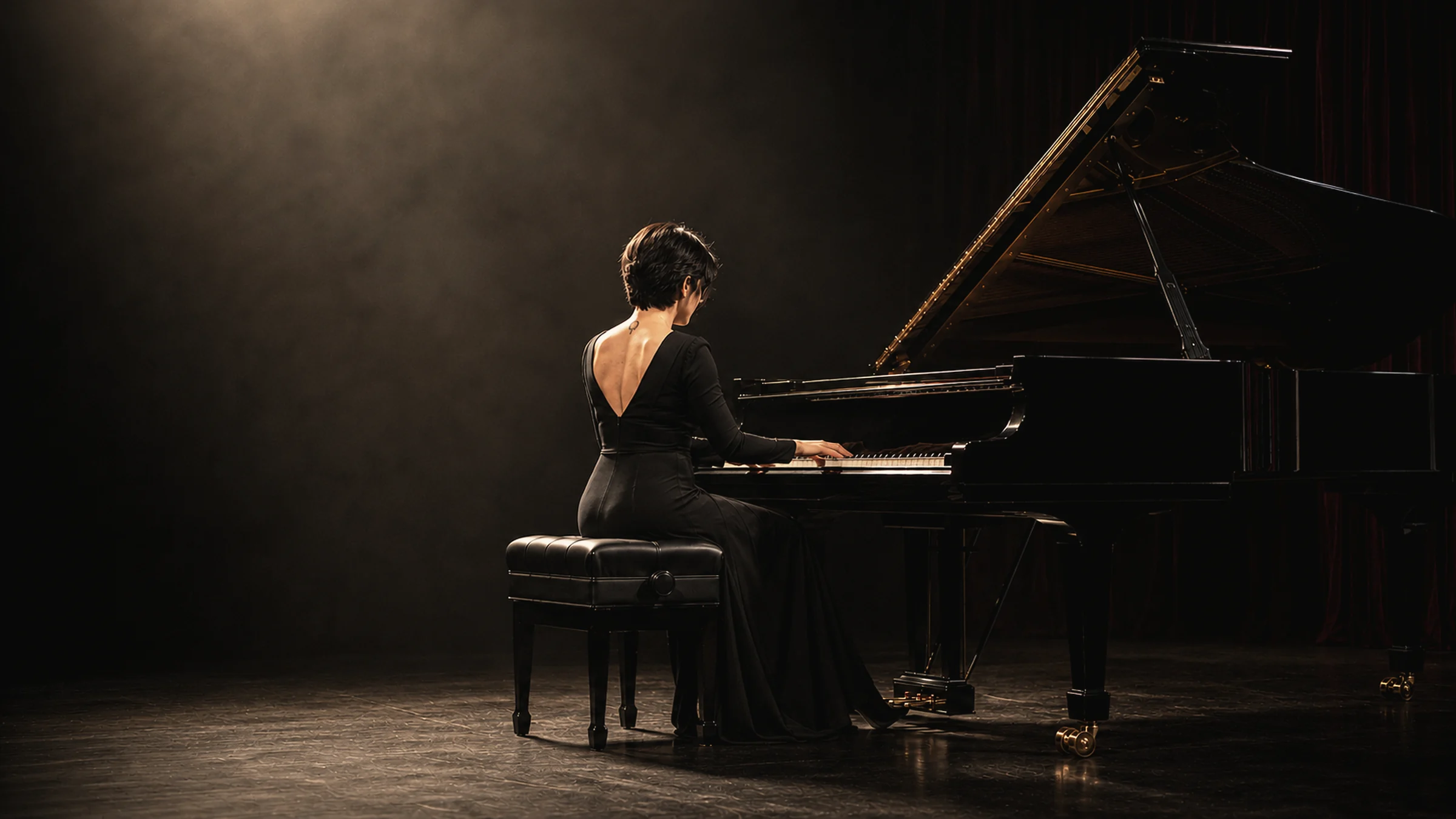
Not every performance is an exam. Sometimes we step onto the stage simply to give music a voice and to share it.
12 — Your own musical voice
Finding your own musical voice
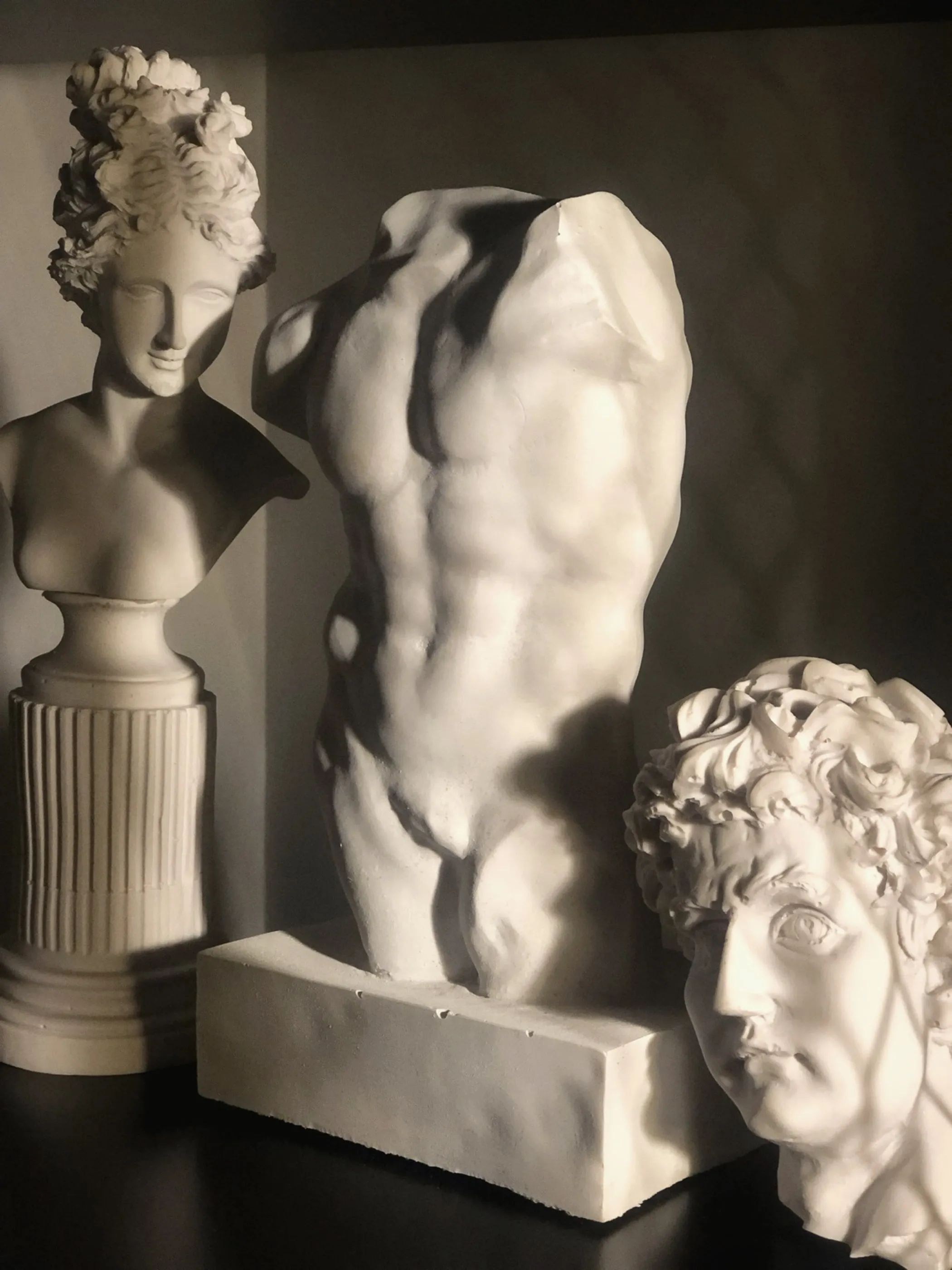
In the end, the aim of education is not simply a student who can play harder pieces.
What matters to us is that students understand the music they hear, can work on a new piece on their own, and can use what they have learned to shape their own interpretation.
The teacher shows the way; in time, the student begins to walk their own musical path.
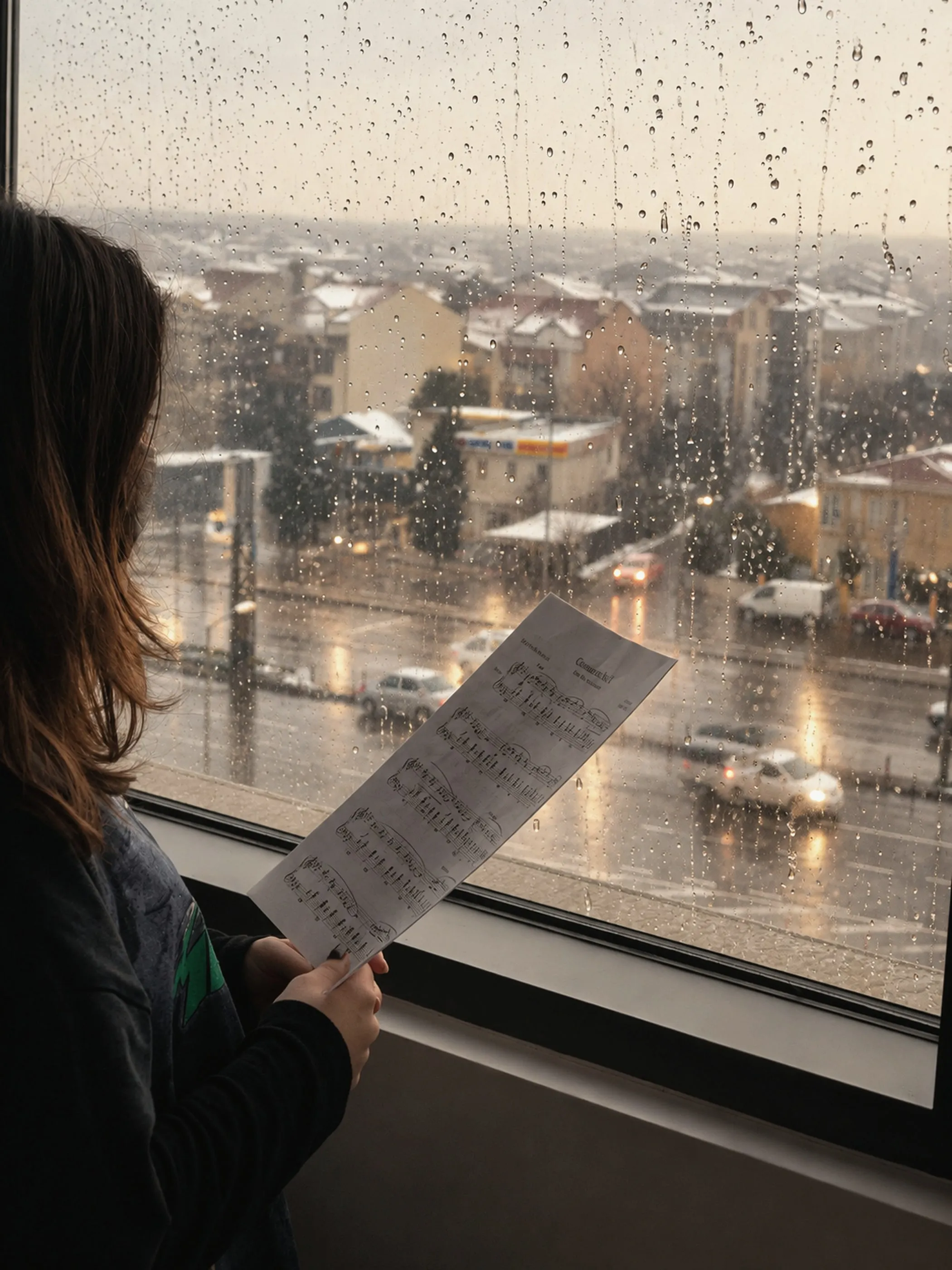
Listen to the music within.
Give it a voice.